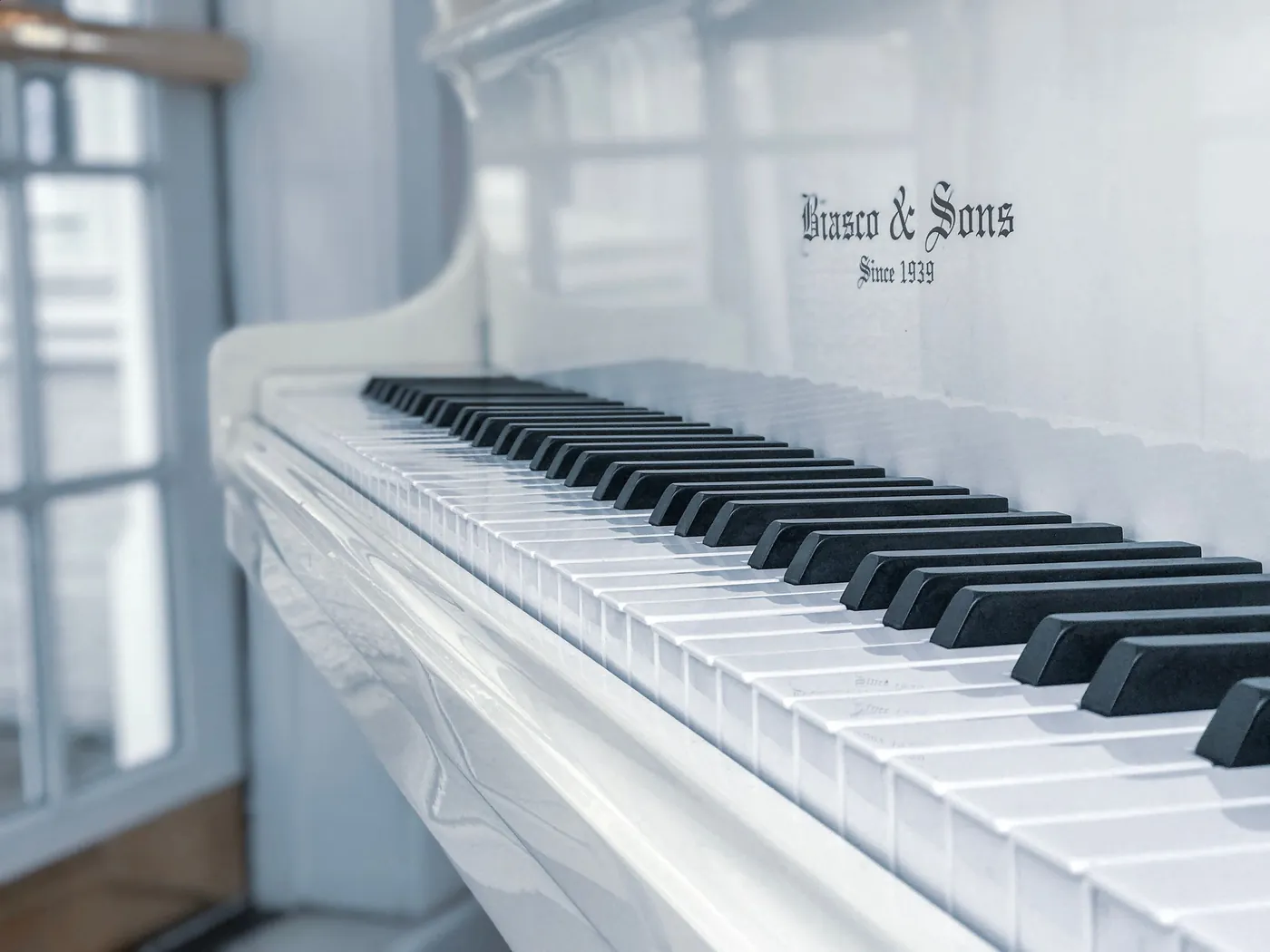
Bilateral music moves sound gently between your left and right ear. That alternation supports dual attention processing: part of your attention stays anchored in the safety of the present room while another part touches the material you are working on.
Music also does something talk cannot. It reaches emotion directly, without waiting for the right words, and it carries memory in a way that is often more honest than narrative. For clients who find language slow, guarded or exhausting, it can open a door that had been stuck.
This is a distinct thread in Nicole's training — over a year of formal study in music-embodied psychotherapy — rather than background sound during a session.
What a session involves
Bilateral music is usually woven into EMDR or somatic work rather than used alone. Headphones are recommended for virtual sessions.